Dependence on the ferry and Preguiça's small airport is driving up the cost of every housing project in São Nicolau
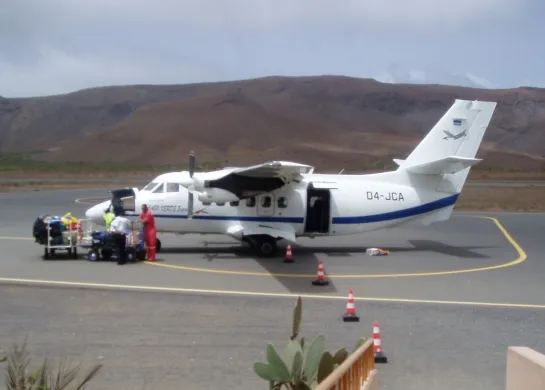
An island dependent on the sea and a small airstrip
Almost all building materials arrive by ferry, supplemented by the Preguiça airstrip.
Extra costs of up to 30% compared with other islands
Materials can cost up to 30% more than on islands with higher-capacity ports.
Container shipping: a fixed cost that weighs on every project
Freight for a single container adds around 250,000 CVE to the cost.
A structural factor shaping the entire property market
This dependence explains why building on the island costs more.
Preguiça, the island's narrow gateway
The Preguiça airstrip, with its limited capacity, works alongside the ferry as the only way to bring goods into São Nicolau. Developers must plan weeks in advance for the arrival of materials that reach other islands within days. This particularly affects bulky materials such as blocks, steel rebar and carpentry fittings.
Comparison with islands that have higher-capacity ports
Builders who also work in Santiago or São Vicente agree that the extra cost can reach up to 30% compared with islands that have deeper-draught ports. This difference feeds through into the final price of new housing and puts São Nicolau at a disadvantage. Some developers are cutting back on imported materials, although this limits the type of housing on offer.
The container: a fixed line item in every budget
Freight for a container adds a fixed cost of around 250,000 CVE, regardless of the final volume transported. This forces small developers to pool orders and plan several projects at once to spread out the extra expense. Some families share a container with neighbours building at the same time.
A factor that is also holding back investment
Developers from outside the island admit that logistics costs are the main obstacle to investing in São Nicolau. Any savings on land quickly evaporate once the final cost of construction is worked out. Local authorities have for years been calling for port improvements to reduce this structural dependence.
More in News
Brava, Cape Verde's smallest island, watches its houses empty out in step with emigration
With just a few thousand inhabitants and a population that keeps shrinking, Nova Sintra has a property market that is nearly frozen, kept alive solely by diasp…
Ribeira Brava holds steady prices as emigration sets the market's pace
In São Nicolau, remittances from the diaspora sustain the building of family homes, but a lack of local buyers leaves a housing stock with many houses shut for…
Maio, the island where buying a home is still nearly impossible for lack of supply
With the least developed property market in all of Cape Verde, Vila do Maio records barely any sales, while emigration leaves homes standing empty, neither sol…
Volcanic risk is already shaping house prices in São Filipe
At the foot of the Pico do Fogo volcano, memories of the last eruption continue to weigh on the value of homes near the caldera, while São Filipe's town centre…