Volcanic risk is already shaping house prices in São Filipe
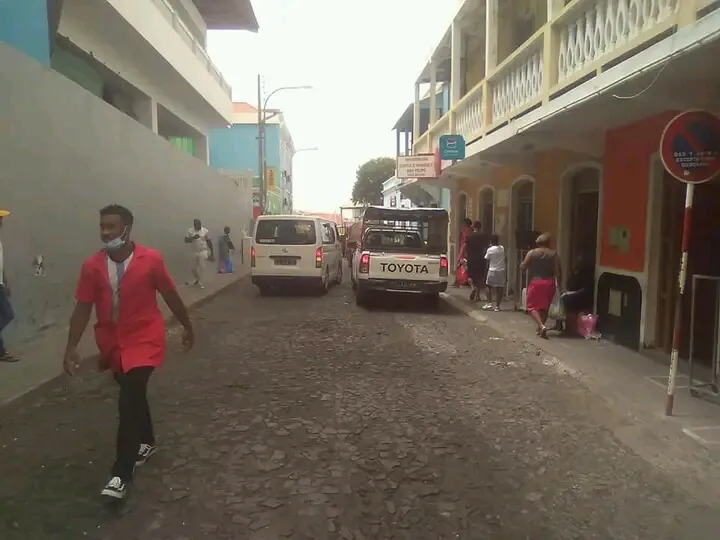
On Fogo, the volcanic island of Cape Verde, the housing market lives alongside a factor found nowhere else in the archipelago: the risk of an eruption from Pico do Fogo, whose last major episode of activity forced the evacuation, and partial rebuilding, of the Chã das Caldeiras area. That history still shapes buying decisions and property values according to their proximity to the crater.
Prices falling near the caldera, rising along the coast
According to estate agents on the island, homes and plots in Chã das Caldeiras, within the highest-risk area, remain very cheap and draw demand almost exclusively from families tied to the local winemaking tradition, who continue producing Fogo's well-known wine despite the risk they take on. In São Filipe, the island's capital and outside the direct danger zone, house prices have by contrast risen moderately but steadily, with flats in the historic centre — built in Portuguese colonial style — now going, according to property listings, for around 25,000-35,000 CVE per square metre.
A niche tourism trade starting to move the market
Fogo draws a much smaller hiking and nature-tourism crowd than Sal or Boa Vista, but a growing one, centred on climbing the volcano and visiting the wineries of Chã das Caldeiras. This flow of visitors has spurred the conversion of rural houses into tourist accommodation on the outskirts of São Filipe, an activity that, according to industry sources, is starting to push up prices for homes suited to mixed residential and tourist use.
Rebuilding, caught between public aid and private reluctance
After the eruption, the Cape Verdean government rolled out rehousing and rebuilding programmes for the affected families of Chã das Caldeiras, some of whom ultimately chose to settle permanently in São Filipe or other, safer parts of the island, adding further pressure to the capital's housing stock. Municipal sources acknowledge that some of the caldera's former residents nonetheless returned to rebuild their homes, drawn back by the volcanic soil's fertility for growing vines.
Insurance and financing, the quiet brake on the market
Beyond price, industry figures point to the real obstacle to reviving Fogo's property market: the difficulty of insuring and financing homes on an island classified as an active volcanic risk zone, which limits access to mortgage credit even for buyers interested in safe areas such as São Filipe. Local authorities are calling on central government for specific public guarantee schemes that would ease access to housing without penalising the whole island for a risk concentrated around its crater.
More in News
Brava, Cape Verde's smallest island, watches its houses empty out in step with emigration
With just a few thousand inhabitants and a population that keeps shrinking, Nova Sintra has a property market that is nearly frozen, kept alive solely by diasp…
Ribeira Brava holds steady prices as emigration sets the market's pace
In São Nicolau, remittances from the diaspora sustain the building of family homes, but a lack of local buyers leaves a housing stock with many houses shut for…
Maio, the island where buying a home is still nearly impossible for lack of supply
With the least developed property market in all of Cape Verde, Vila do Maio records barely any sales, while emigration leaves homes standing empty, neither sol…
Boa Vista nears building saturation in Sal Rei amid a second-home boom
The rise of resorts and holiday flats on Boa Vista is driving up demand for buildable land, while doubts grow over whether infrastructure can really keep pace.