The salt pans of Porto Inglês, caught between industrial decay and the first proposals for property redevelopment
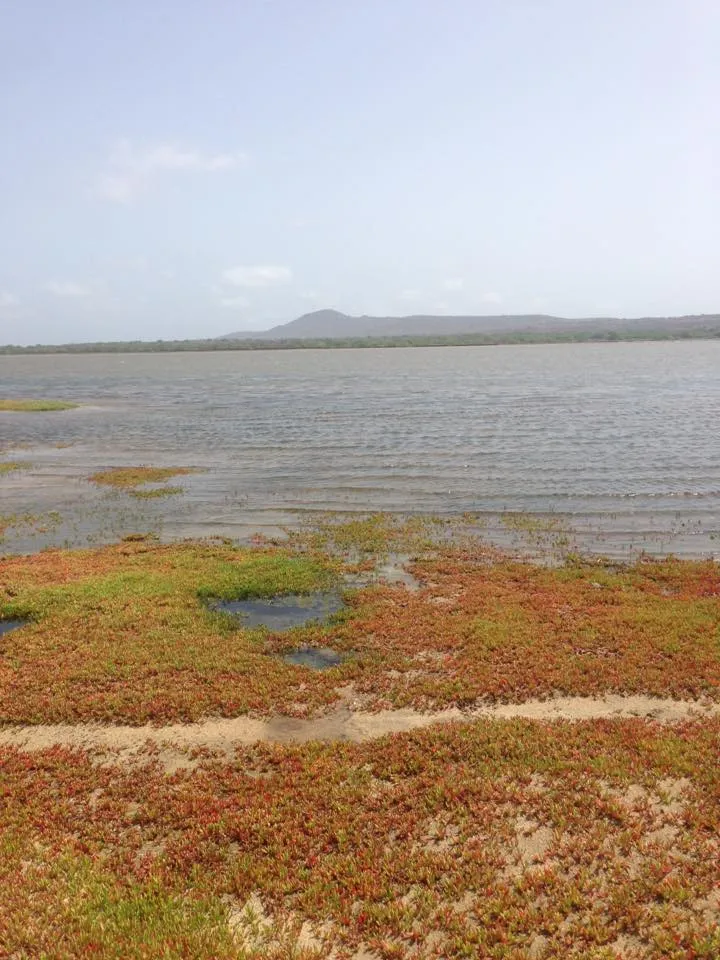
An industrial landscape frozen in time
The salt pans now function as a wetland of considerable ecological value and a habitat for the Kentish plover.
Redevelopment ideas on the table
Pilot projects worth between 20 and 25 million CVE are being floated for the adjoining land.
Environmental protection as a brake
Its status as a protected wetland places severe limits on what the land may be used for.
Birdwatching versus bricks and mortar
Its value as a draw for nature tourism could count for more than any property scheme.
An export trade that came to an end
The salt pans of Porto Inglês once exported salt to other islands in the archipelago and to markets overseas for much of the last century, when manual extraction employed a considerable number of local workers. The gradual closure of the commercial operation, driven by competition from imported industrial salt, left the site disused with no clear plan for the land. Several generations of families in Maio have first-hand memories of that industry, now reduced to abandoned industrial heritage. It is that decades-long void which some local developers would now like to fill with new uses.
Conservationists warn of the risks
Environmental organisations working in Maio have voiced concern about any project that might disturb the wetland's hydrological balance, on which the steady presence of the Kentish plover and other migratory birds depends. These groups point out that the salt pans rank among the most ecologically valuable sites in the Cabo Verdean archipelago, and are calling for any development to be confined strictly to adjoining plots that are already degraded. National environmental authorities have requested further reports before authorising any pilot project. The environmental assessment process is therefore shaping up to be the main obstacle for developers.
Birdwatching tourism as an alternative
Local guides and small nature tourism operators argue that the salt pans themselves, with no new construction at all, could become draw enough to attract visitors interested in birdwatching. They point to other protected wetlands in the archipelago that have managed to generate steady income through guided walks and small visitor centres. This model would require far less investment than the property schemes proposed and, according to its supporters, would stir up less friction with environmental bodies. Maio's council has not ruled out combining the two approaches in its future planning.
A debate that will take time to settle
None of the proposals to redevelop land adjoining the salt pans has yet received final approval, and municipal sources admit the process could drag on for several more years. Maio's small population, one of the lowest in Cabo Verde, means any decision about the use of this land carries greater symbolic weight than it would on a larger island. While the debate runs its course, the salt pans continue to serve as a protected wetland with no economic activity attached. For many residents, the site's future will hinge on whether conservation or tourism development is given priority.
More in News
Brava, Cape Verde's smallest island, watches its houses empty out in step with emigration
With just a few thousand inhabitants and a population that keeps shrinking, Nova Sintra has a property market that is nearly frozen, kept alive solely by diasp…
Ribeira Brava holds steady prices as emigration sets the market's pace
In São Nicolau, remittances from the diaspora sustain the building of family homes, but a lack of local buyers leaves a housing stock with many houses shut for…
Maio, the island where buying a home is still nearly impossible for lack of supply
With the least developed property market in all of Cape Verde, Vila do Maio records barely any sales, while emigration leaves homes standing empty, neither sol…
Volcanic risk is already shaping house prices in São Filipe
At the foot of the Pico do Fogo volcano, memories of the last eruption continue to weigh on the value of homes near the caldera, while São Filipe's town centre…