Agulo pushes ahead with renovating its traditional houses to curb the abandonment of its historic centre
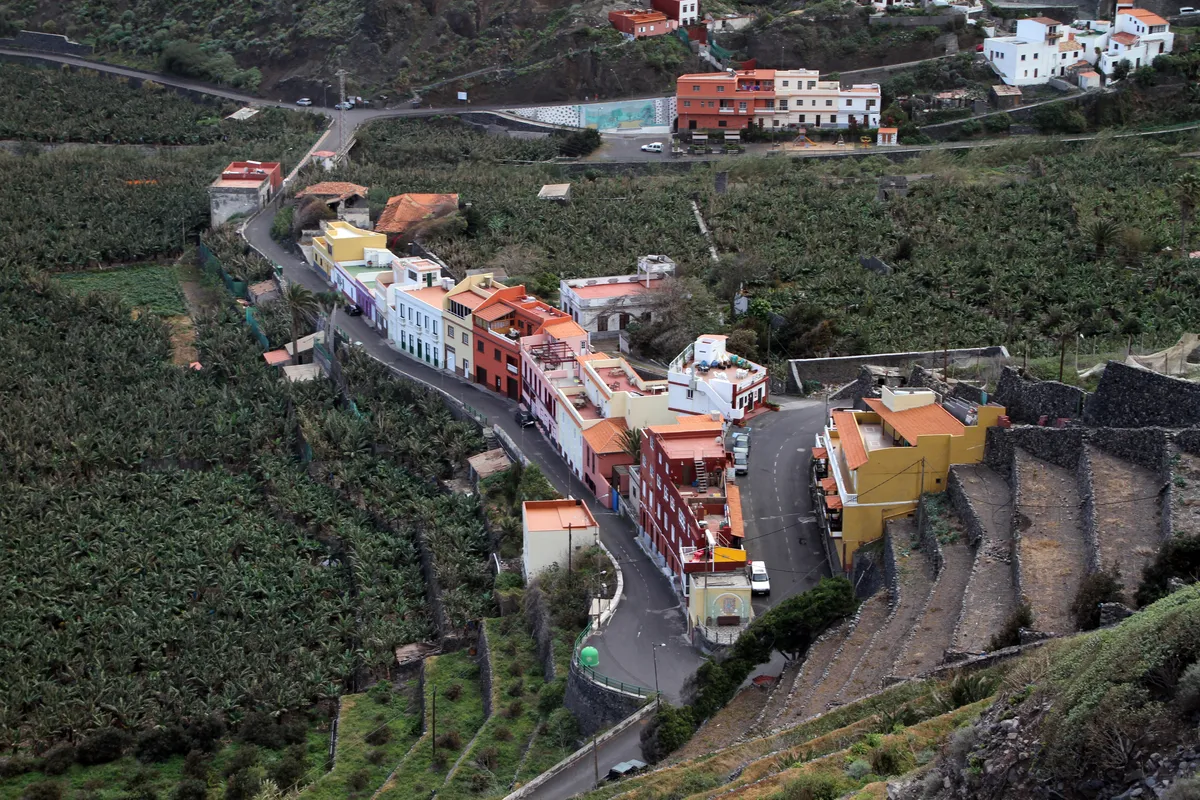
A historic centre with more empty houses than inhabited ones
A significant proportion of the housing in the historic centre remains closed or run-down.
Renovation grants aimed at residential use
The town council is promoting grants to stop renovations ending up as tourist accommodation.
Heritage value as an added argument
Agulo's scenic appeal turns every restored home into an asset with added value.
Technical and access difficulties
The municipality's terrain makes renovation work more expensive than in other areas.
A village with a privileged view of Teide
Agulo sits on a promontory with direct views of Teide across the water, a scenic feature residents consider key to understanding the recent interest in its traditional homes. This setting, combined with a compact layout of narrow streets and stone houses, has made the municipality a reference point within La Gomera for those seeking a second home with character. The town council itself promotes these views as part of its strategy to attract new residents to the historic centre. Several owners who have renovated their homes cite the scenery as the main reason for their decision.
Residents divided over what the grants should fund
Not all Agulo residents equally back the council's focus on residential use for its grants. Some owners of empty homes would rather use their property for holiday lets, which offer a faster return than a long-term let at a capped rent. The council defends its approach, arguing that its priority is to keep people living there and stop the village becoming a cluster of houses empty for most of the year. This debate is repeated in other small Canary Islands municipalities with protected historic centres.
The added cost of building on a slope
Agulo's steep terrain, with its sharp streets and narrow access points, often means construction materials have to be carried up by hand or with small machinery, making building work more expensive than in flatter parts of the island. Several local contractors estimate that a renovation in the historic centre can cost between 15% and 20% more than an equivalent project in the San Sebastián de La Gomera area. This extra cost puts some owners off carrying out the work despite the grants available. The town council is considering additional financial support to offset this added difficulty.
A model looking to other villages on the island
Agulo is not the only municipality in La Gomera grappling with the challenge of empty houses in its old town, and its experience is being followed closely by other island councils such as Vallehermoso or Hermigua. Heritage officials stress that the success of these grants will depend on maintaining a steady pace of renovations over several years, rather than one-off actions. Coordination between different municipalities could allow technical resources to be shared and management costs reduced. For now, each council runs its own programme independently.
More in News
Brava, Cape Verde's smallest island, watches its houses empty out in step with emigration
With just a few thousand inhabitants and a population that keeps shrinking, Nova Sintra has a property market that is nearly frozen, kept alive solely by diasp…
Ribeira Brava holds steady prices as emigration sets the market's pace
In São Nicolau, remittances from the diaspora sustain the building of family homes, but a lack of local buyers leaves a housing stock with many houses shut for…
Maio, the island where buying a home is still nearly impossible for lack of supply
With the least developed property market in all of Cape Verde, Vila do Maio records barely any sales, while emigration leaves homes standing empty, neither sol…

Volcanic risk is already shaping house prices in São Filipe
At the foot of the Pico do Fogo volcano, memories of the last eruption continue to weigh on the value of homes near the caldera, while São Filipe's town centre…