Young people in Maio face an uphill struggle to buy a first home as supply all but disappears
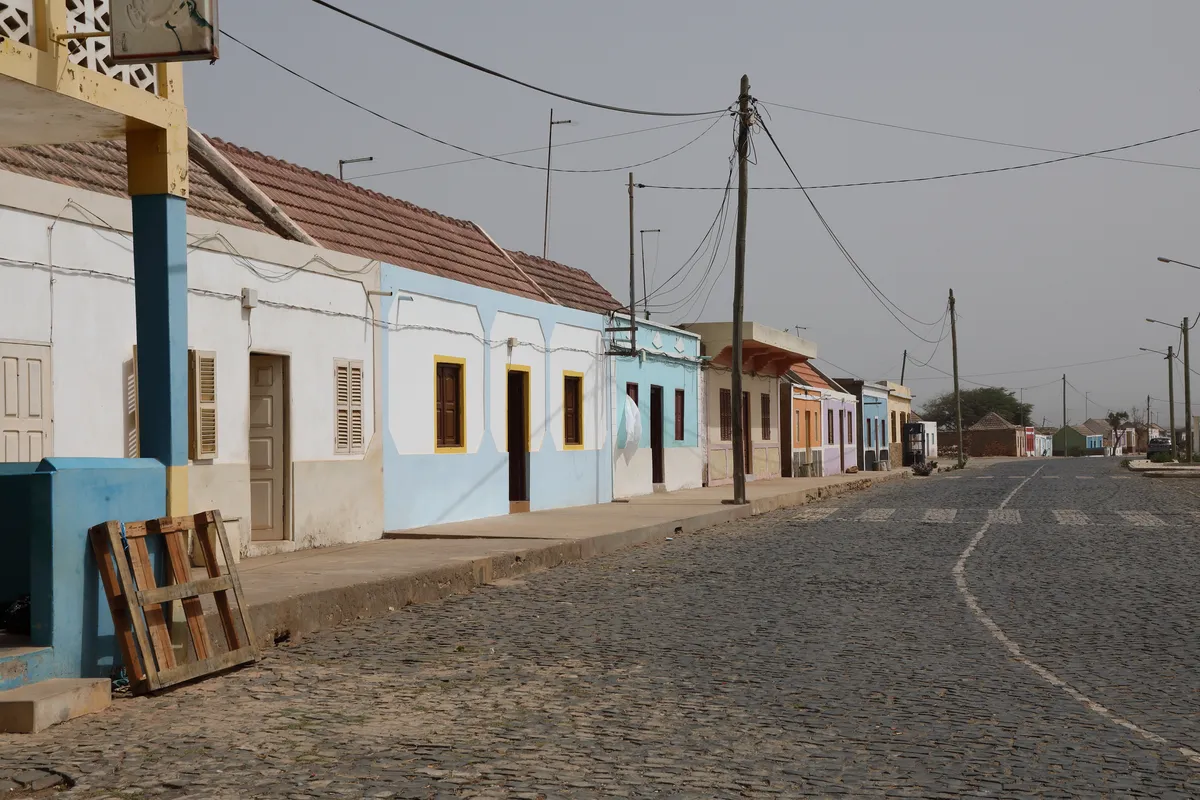
Few houses, and none for sale
Finding a home for sale in Morrinho or Porto Inglês is very nearly a stroke of luck.
The financing hurdle
A modest home costs between 2,000,000 and 4,000,000 CVE, a stretch on local wages.
Renting is no easier
Flats to rent are just as scarce as those on the market to buy.
Emigration as a safety valve
Maio has one of the highest rates of young people leaving anywhere in the country.
A property market at a near standstill
In Maio, the shortage of homes for sale owes less to strong demand than to the near-total absence of new supply, with residential construction on the island having stood virtually still for years. Residents of Porto Inglês explain that the few homes that do come onto the market are usually sold by direct agreement between families, without ever being publicly advertised, which narrows the options for young first-time buyers still further.
Banks and guarantors, an added obstacle
The financial institutions operating in Cabo Verde demand guarantors and deposits that are hard to put together for workers whose wages depend on tourism or local government, the main sources of employment in Maio. Several young people interviewed said that even with savings of their own, the lack of an additional guarantee from a relative on a stable income is usually the reason their loan applications are turned down, forcing them to postpone buying a home indefinitely.
Emigration as the only real alternative
Faced with this outlook, a large share of Maio's young people choose to move to Praia, to other islands or abroad, repeating a pattern that already shaped earlier generations on the island. Local authorities acknowledge that halting this outflow will inevitably mean making housing easier to obtain, though municipal resources for developing public land remain very limited compared with economically weightier islands such as Santiago or Sal.
Calls for dedicated schemes
Youth groups in Maio have asked the government to launch social housing schemes tailored to the particular circumstances of a small island with little building activity, along the lines of those already running elsewhere in the country. The proposals include microcredit facilities on more flexible terms and the transfer of municipal public land for assisted self-build, although so far no specific initiative has produced visible results.
More in News
Brava, Cape Verde's smallest island, watches its houses empty out in step with emigration
With just a few thousand inhabitants and a population that keeps shrinking, Nova Sintra has a property market that is nearly frozen, kept alive solely by diasp…
Ribeira Brava holds steady prices as emigration sets the market's pace
In São Nicolau, remittances from the diaspora sustain the building of family homes, but a lack of local buyers leaves a housing stock with many houses shut for…
Maio, the island where buying a home is still nearly impossible for lack of supply
With the least developed property market in all of Cape Verde, Vila do Maio records barely any sales, while emigration leaves homes standing empty, neither sol…
Volcanic risk is already shaping house prices in São Filipe
At the foot of the Pico do Fogo volcano, memories of the last eruption continue to weigh on the value of homes near the caldera, while São Filipe's town centre…