The 'red desert' of Barreiro da Faneca sparks nascent residential tourism in Santa Maria's interior
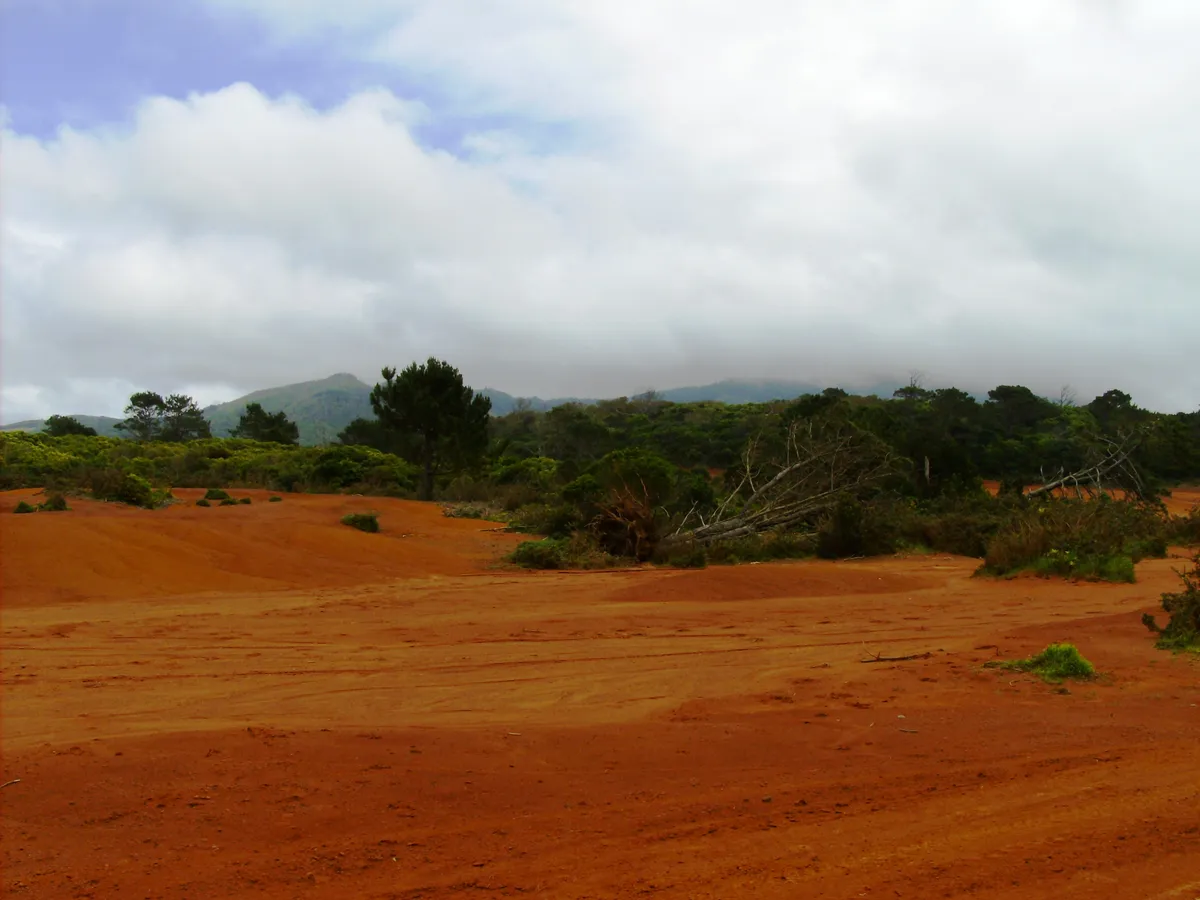
A landscape that hardly looks like the Azores
Barreiro da Faneca is an area of reddish clay designated a Protected Landscape Area.
From geological curiosity to tourist draw
Hiking trails are drawing interest in nearby farms and rural houses.
Modest but growing pressure on land
The few plots with legal building rights have doubled in value in five years.
Balancing conservation and development
Any development must be kept at a safe distance from the protected area.
A geological rarity unique in the Azores
Barreiro da Faneca owes its appearance to the erosion of clay and volcanic materials that have produced a palette of reddish and ochre tones unusual in the Azorean landscape, which is dominated by green. Geologists who have studied the area consider it a unique case within the archipelago, comparable only to isolated formations on other volcanic Atlantic islands. This rarity has made Barreiro one of the most widely used images of Santa Maria in tourism promotional material. The regional government itself uses these photographs to position the island as a nature destination within the Azores.
Hikers who then look for nearby lodging
Hiking guides who run routes to Barreiro da Faneca report that many visitors go on to ask about staying at a rural guesthouse or farm in the area to extend their trip. This demand, still modest, is starting to encourage some owners of neighbouring farms to consider small renovations geared towards rural tourism. Santa Maria's tourism associations see the trend as an opportunity to diversify an offering traditionally centred on the island's beaches. For now, though, dedicated rural accommodation remains scarce.
Scarce land, notable revaluation
Protected status drastically limits the number of plots with legal building rights in the immediate vicinity of Barreiro, which local estate agents say explains why its value has doubled in just five years. This scarcity contrasts with the abundance of unused rural land elsewhere on the island, away from the scenic draw. Buyers interested in these plots tend to be either returning emigrants or small investors drawn by the recent rise in value. Current owners, aware of this trend, are showing less and less urgency to sell.
Municipal planning, guardian of the balance
Vila do Porto council takes a cautious stance on any development initiative near the protected area, making any project conditional on minimum distances and favourable environmental reports. Municipal technicians insist that Barreiro's value lies precisely in its untouched natural character, and that excessive development nearby could undermine the very appeal now driving property interest. This stance has created some friction with owners who are calling for greater flexibility to make their land profitable. Balancing conservation and development remains, for now, the central issue in the debate in Santa Maria.
More in News
Brava, Cape Verde's smallest island, watches its houses empty out in step with emigration
With just a few thousand inhabitants and a population that keeps shrinking, Nova Sintra has a property market that is nearly frozen, kept alive solely by diasp…
Ribeira Brava holds steady prices as emigration sets the market's pace
In São Nicolau, remittances from the diaspora sustain the building of family homes, but a lack of local buyers leaves a housing stock with many houses shut for…
Maio, the island where buying a home is still nearly impossible for lack of supply
With the least developed property market in all of Cape Verde, Vila do Maio records barely any sales, while emigration leaves homes standing empty, neither sol…
Volcanic risk is already shaping house prices in São Filipe
At the foot of the Pico do Fogo volcano, memories of the last eruption continue to weigh on the value of homes near the caldera, while São Filipe's town centre…