Porto Santo's former melon fields caught between developers and winegrowers
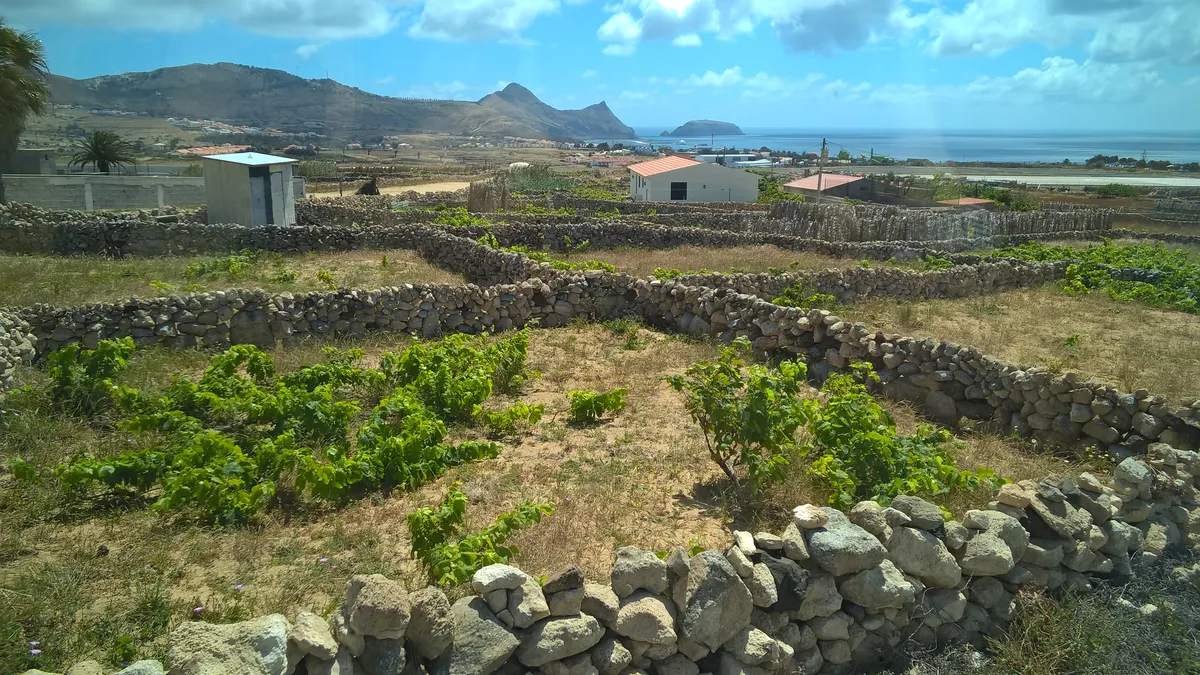
Much of the interior was once given over to dry-farmed melons and vegetables, now largely abandoned.
From market garden to vineyard
Part of the land has been converted into small vineyards enclosed by stone walls.
Farmland as a property reserve
Another part is being held as a land reserve pending reclassification.
A transformation that worries part of the sector
The disappearance of traditional crops erases a landscape that is part of the island's identity.
A crop that shaped the inland landscape
Melon growing was for decades one of the hallmarks of Porto Santo's agricultural identity, making the most of a dry climate ideally suited to this dry-farmed variety. Older farmers recall a time when much of the island's interior was devoted to this crop, now reduced to scattered plots, many of them uncultivated. The gradual decline of the farming sector has left a significant share of this land without any active productive use.
The vineyard as a profitable alternative
Small winegrowers who have chosen to convert former melon fields into vineyards protected by stone walls say the activity offers better economic prospects than traditional farming, helped in particular by growing interest in Porto Santo wines among visitors from Madeira. Even so, they acknowledge that the converted area remains small compared with the total amount of abandoned land, and that incentives are lacking to encourage more owners to follow this path.
The prospect of rezoning
Other owners prefer to keep their plots out of agricultural use in the hope of an eventual rezoning that would allow building, a strategy some council officials regard as contrary to the general interest of preserving productive land. The Câmara Municipal of Porto Santo has so far avoided taking a position on any significant change to the classification of this land, aware of the pressure any such decision would put on the island's housing market.
A defining landscape at risk of disappearing
Local historians and cultural associations in Porto Santo warn that the gradual disappearance of traditional crops, whether through abandonment or replacement by vineyards or land reserves, means the loss of a landscape that was part of the island's agricultural identity for generations. They are calling for any decision on the future of this land to also take into account its historical value, not just its immediate economic potential.
More in News
Brava, Cape Verde's smallest island, watches its houses empty out in step with emigration
With just a few thousand inhabitants and a population that keeps shrinking, Nova Sintra has a property market that is nearly frozen, kept alive solely by diasp…
Ribeira Brava holds steady prices as emigration sets the market's pace
In São Nicolau, remittances from the diaspora sustain the building of family homes, but a lack of local buyers leaves a housing stock with many houses shut for…
Maio, the island where buying a home is still nearly impossible for lack of supply
With the least developed property market in all of Cape Verde, Vila do Maio records barely any sales, while emigration leaves homes standing empty, neither sol…
Volcanic risk is already shaping house prices in São Filipe
At the foot of the Pico do Fogo volcano, memories of the last eruption continue to weigh on the value of homes near the caldera, while São Filipe's town centre…